Language App vs Online Tutor: Which One Builds Real Speaking Ability?

An 800-Day Streak and a Frozen Sentence
A learner with an 800-day streak who freezes when a waiter asks a question is a familiar story. The app worked, and the goal still slipped away.
That gap is not a motivation failure. Apps and tutors train different halves of a language, and most people buy the half that feels comfortable rather than the half they lack. Recognition is comfortable, because you see four options, pick one, and get a green tick. Production is uncomfortable, since you must build a sentence with nobody offering choices.
This guide compares the two routes by what they actually train, what they cost per hour of corrected speaking, and how to combine them without paying for three subscriptions you barely open.
Short on Input, or Short on Output?
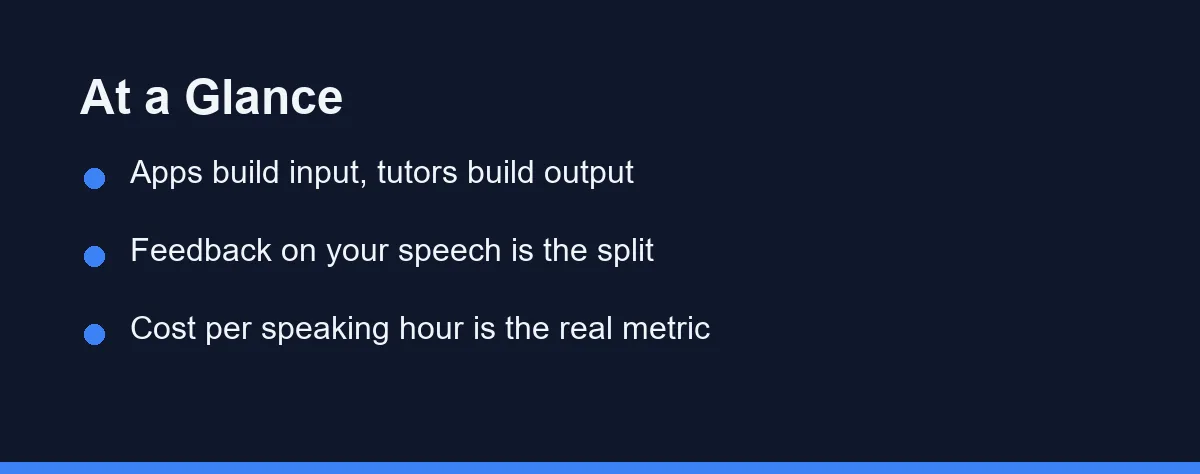
Choose an app if you are starting from zero, need vocabulary and basic structure, and want daily practice that fits a commute. Apps win on habit, cost, and convenience, and they carry beginners a long way.
Choose an online tutor if you can already read simple text but cannot hold a conversation. Speaking improves through corrected attempts, and a tutor supplies the pressure, the correction, and the schedule that an app cannot.
Diagnosing which half you lack takes one test. If you understand a podcast but cannot answer a question, you have an output problem, and more app drilling will not fix it. If subtitles still lose you, more input is the cheaper next step.
Your deadline sharpens the answer further. A trip in three months, a work meeting, or an exam each demand production, so they push you toward tutoring earlier than a general interest in a language does.
The strongest routine usually mixes both. Keep a short daily app session for review, then add one or two tutor lessons a week for output. Our Duolingo vs Babbel comparison covers the app half of that split.
Seven Routes, Sorted by What They Train
The table sorts the main routes by what they train and how feedback reaches you. The final column names the learner who tends to get the most from each.
| Route | Format | Strongest at | Feedback on your speech | Best fit |
|---|---|---|---|---|
| Duolingo | Short gamified drills | Vocabulary, daily habit | Automated, limited | Beginners building routine |
| Babbel | Dialogue-based lessons | Practical phrases, grammar | Automated, plus live classes | Adults who dislike gamification |
| Pimsleur | Audio recall sessions | Pronunciation, spoken recall | Self-checked against audio | Commuters and auditory learners |
| italki | One-to-one booked lessons | Unscripted conversation | Direct human correction | Intermediate learners who stall |
| Preply | Packaged one-to-one lessons | Consistency through a fixed slot | Direct human correction | Learners who need a schedule |
| Lingoda | Structured group classes | Curriculum progress, peer speaking | Teacher-led, shared time | Learners who want a syllabus |
| Tandem or HelloTalk | Peer language exchange | Casual conversation volume | Informal and inconsistent | Confident learners on a budget |
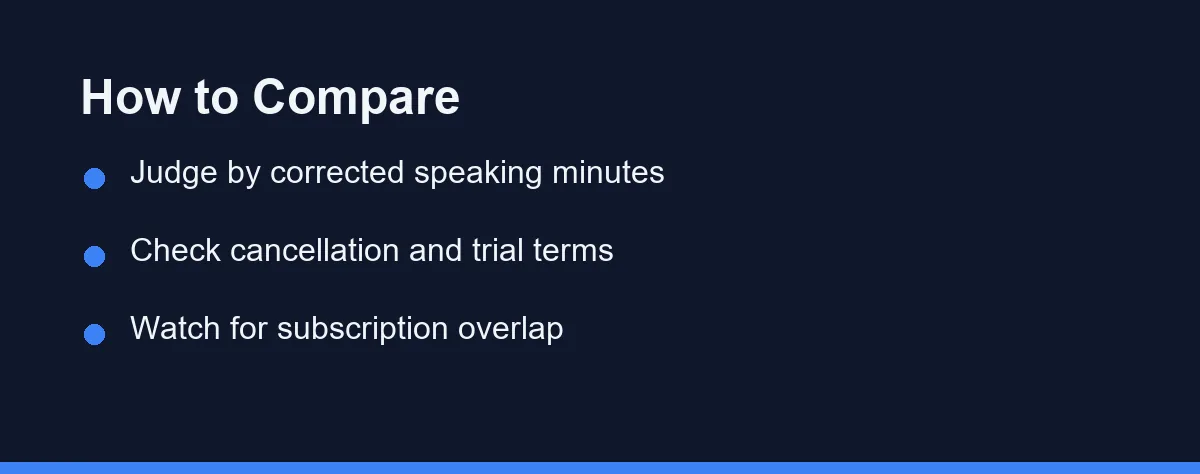
The split is consistent across languages. Self-study products dominate input, and booked human time dominates output, with group classes sitting between the two on both cost and speaking volume.
Duolingo anchors the free tier of the market with short gamified lessons and a large language catalog. Paid tiers remove ads and add AI conversation features, which suits absolute beginners and daily habit building.
Babbel builds lessons around practical dialogue and grammar explanation, with a separate live class product. Learners who dislike gamification often prefer its more conventional structure.
Pimsleur takes an audio-first approach with spaced recall prompts. It forces spoken responses from the first lesson, which makes it unusual among self-study tools, and it fits commuting or walking.
italki is a marketplace where you book individual community tutors or professional teachers by the lesson. Pricing varies by teacher and language, so the same budget buys very different amounts of practice. italki’s own guide says community tutors typically charge $4 to $20 per lesson, as of October 2026.
Preply works similarly but leans toward lesson packages and subscriptions, which suits learners who want a fixed weekly slot. Lingoda instead sells structured group classes on a curriculum, which appeals to people who want a syllabus rather than free conversation.
Language exchange apps such as Tandem and HelloTalk trade your native language for someone else’s. They cost nothing but demand social effort, and the quality of correction varies with your partner.
Corrected Speaking Minutes, and Who Corrects Them
One number separates every option on the table. An hour of app drilling may include almost no unscripted speech, while a tutor hour is nearly all production with feedback.
The Metric That Sorts Everything
Automatic pronunciation scoring flags obvious errors, but it rarely explains why a phrase sounds unnatural. A human notices the habit you repeat, which is where most plateaus live.
Level fit follows the same pattern. Beginner content is abundant and cheap, while upper-intermediate content is scarce. That scarcity arrives exactly at the stage where apps thin out and tutors become the practical option.
Watch out for confusing streaks with progress. A daily streak measures attendance, not ability, and it can hide months of practice that never advanced past a comfortable level. Test yourself against something harder every few weeks.
Why a Booked Slot Beats a Notification
A booked lesson with a real person is hard to skip, and that friction is a feature. Self-paced tools lose learners quietly, which is why streaks exist in the first place.
Look at your calendar honestly before buying that accountability. Learners who cannot protect a fixed hour tend to waste lesson packages, and a self-paced app plus one weekend lesson often beats an ambitious plan that collapses.
Do not postpone speaking until you feel ready either. That readiness never arrives, because the discomfort comes from lack of practice rather than lack of vocabulary. Booking an early lesson breaks the loop.
Cost per Corrected Speaking Hour
App subscriptions follow the familiar software pattern. A free tier carries ads, a mid tier removes them, and a premium tier bundles AI practice or live classes. Annual billing usually cuts the monthly rate, and that discount only pays off if you keep the habit past month three.
Tutor pricing depends on the teacher, the language, and their credentials rather than a fixed platform rate. Community tutors sit well below certified teachers, and less commonly taught languages often price higher because supply is thin. Group classes land between the two, since you share the teacher’s attention and speak less per hour while the hourly rate drops.
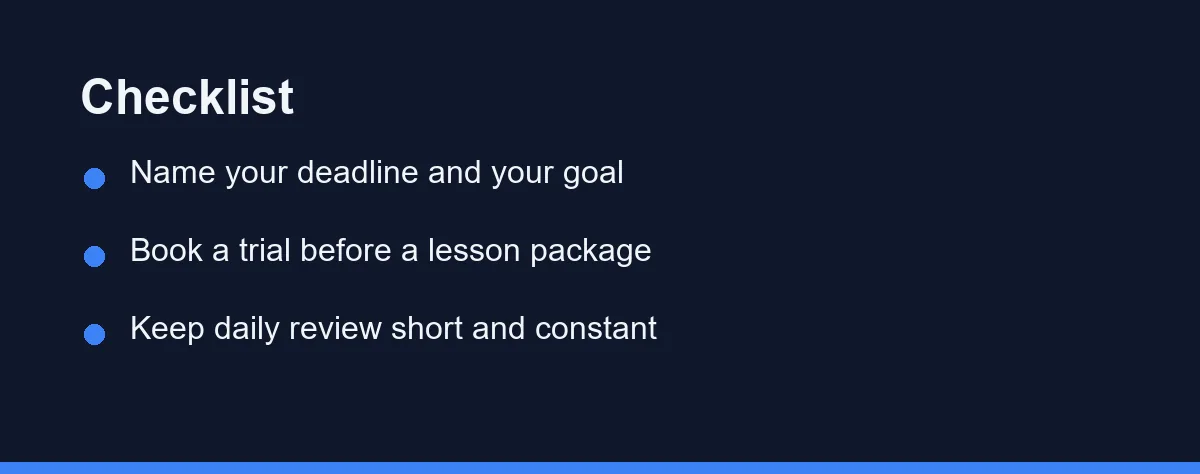
Compare weekly spend against weekly speaking output rather than unit price. A cheap lesson booked rarely costs more per unit of progress than a slightly pricier one booked twice a week. An app subscription that produces almost no speech is not cheap in that unit, however small the monthly figure looks.
Avoid stacking subscriptions along the way. Learners often hold two apps and a tutor plan while using only one of them, which turns a small monthly figure into real money. Cancel what you have stopped opening.
Do not choose a tutor by price alone either. A cheap teacher who lets you speak your native language for half the lesson costs more per useful minute than a pricier one who keeps you in the target language.
Use trials before committing, since most tutor platforms price a first lesson lower and most apps offer a free tier. Confirm current pricing on the official site before you subscribe, since any figure quoted here is only accurate at the time of writing. Our guide on free vs paid online courses covers how to judge that trade-off more broadly.
Which Combination Fits Which Learner
Absolute beginner with no deadline: Start with an app and stay there for a few months. Build vocabulary and basic structure first, since a tutor hour spent on beginner vocabulary is expensive practice.
Intermediate learner who stalled: Book a tutor now. The plateau is nearly always an output problem, and one or two weekly conversations restart progress faster than any new app.
Traveling in under three months: Combine Pimsleur-style audio for pronunciation with two tutor sessions a week focused on your real scenarios. Skip broad vocabulary work that your trip will not touch.
Exam or certification target: Choose a certified teacher or a structured class with a syllabus. Exam formats reward specific skills, and free conversation alone leaves gaps in writing and timed tasks.
Tight budget: Pair a free app tier with a language exchange partner, then add one paid lesson a month for correction. This keeps daily practice free while still catching the habits an exchange partner will politely ignore.
Buy the Missing Half
Apps and tutors are not competitors, and the argument between them usually hides a simpler question: are you short on input or short on output?
Answer that honestly, then buy the missing half. Keep the daily app session short, protect the weekly speaking slot, and re-check your plan every few months as your level shifts. Confirm current pricing and trial terms on the official sites before committing to any annual plan.
It also helps to set the expectation in hours rather than months. How long conversational Spanish takes with an app works through the arithmetic that decides when speaking practice becomes worth paying for.
Once the speaking ability is there, an admissions office will still want a score that proves it. Our comparison of the Duolingo English Test and TOEFL iBT for university admission covers the $70 against $280 price gap, the one-hour and two-hour formats, and which one your target programs actually accept.
FAQ
Can you become conversational using only a language app?
Apps build vocabulary, reading, and listening well, and many learners reach a solid intermediate base with one. Speaking is the weak point, because tapping the right answer is recognition rather than production. Most people who become conversational add real conversation somewhere, whether that is a tutor, a class, or a language partner.
How many tutor sessions a week do you actually need?
One session a week keeps a habit alive, and two to three sessions move a learner noticeably faster. Frequency matters more than session length, since short gaps protect recall. Many learners pair two tutor sessions with daily app review rather than booking longer, rarer lessons.
Is a community tutor as good as a certified teacher?
For conversation practice, community tutors are often the better value, because you mainly need a patient speaker who corrects you. Certified teachers earn their premium on grammar explanation, exam preparation, and structured curricula. Many learners book both, using a teacher monthly and a community tutor weekly.
Should you learn some vocabulary before booking a tutor?
A small base helps, but waiting too long is the more common mistake. Around a few hundred words and basic present-tense structure, a patient tutor can carry a slow conversation. Starting earlier also builds tolerance for confusion, which is the real skill that unlocks speaking.
Do AI conversation partners replace a human tutor?
AI roleplay removes scheduling pressure and embarrassment, which makes it useful for drilling. It does not yet replace the social accountability of a booked lesson, and it rarely pushes back when you avoid a hard structure. Treat it as extra reps between human sessions.
Sources
- italki: How to choose an italki tutor (professional teachers vs community tutors) — checked 2026-10-15
- Pimsleur: The Pimsleur Method — checked 2026-10-15
Some links may be affiliate links. We may earn a commission at no extra cost to you.
How this article was made: it was drafted with AI assistance from the official sources listed above, and its figures were checked against those pages on the dates shown. It is not based on personal hands-on testing.
Comments
Post a Comment