Codecademy vs freeCodeCamp: Which Is Better for Learning to Code?
Introduction
Deciding where to learn coding online often comes down to two well-known names. Codecademy promises a polished, guided experience. freeCodeCamp promises a full curriculum at no cost.
Both have taught countless beginners their first lines of code. But they take different paths to get there, and those differences matter for how you learn. One leans on interactive polish, the other on building real projects.
This guide compares Codecademy and freeCodeCamp in practical terms. We look at cost, structure, projects, certifications, and support. The goal is to match the platform to how you actually learn best.
By the end, you will know which platform fits your budget, learning style, and goals. Many learners even use both, and we cover when that makes sense. Your commitment matters more than the logo either way.
Quick Answer
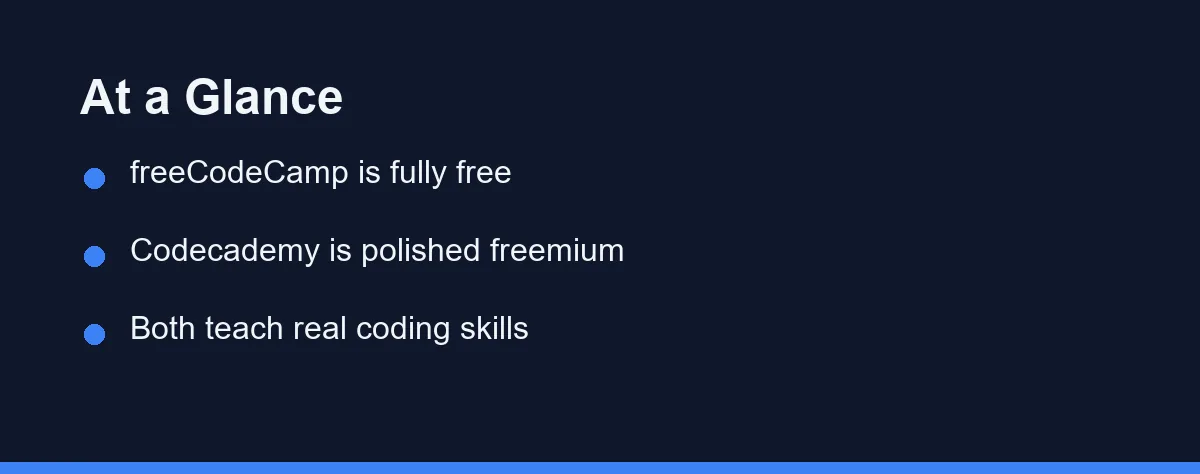
freeCodeCamp is the stronger pick if cost is your main concern. Its full curriculum and certifications are free, and it centers on building real projects. That project focus builds a portfolio as you learn.
Codecademy is the stronger pick if you value a polished, guided experience. Its interactive lessons and structured career paths feel smooth for beginners. Much of that depth sits behind a paid plan, though.
Neither is simply better. freeCodeCamp rewards self-direction and grit, while Codecademy rewards learners who want structure and hand-holding. Your budget and learning style decide the winner more than any feature.
What to Look For
Start with your budget and how firmly it is fixed. freeCodeCamp removes cost from the equation entirely. Codecademy offers a free taste but reserves much of its value for paying members.
Learning style is the next big factor. Some learners thrive in guided, step-by-step interactive lessons. Others learn faster by building messy real projects and searching for answers as they go.
Curriculum structure shapes your day-to-day experience. Codecademy lays out tidy skill paths and career tracks with clear checkpoints. freeCodeCamp organizes around certifications earned by completing hands-on projects.
Project work is where skills become real. freeCodeCamp is built around building things, which mirrors actual development. Check how much genuine project building each platform pushes you to do, since employers care about what you can build. The official freeCodeCamp and Codecademy sites outline their current tracks.
Support and community round out the picture. freeCodeCamp has a large, active forum and public community. Codecademy offers structured help and community features that expand on paid tiers. Consider where you will turn when you get stuck.
Career outcomes deserve honest expectations. Neither platform guarantees a job, and both work best paired with a portfolio. Look at how each supports the leap from lessons to employable skills.
Top Options
These two platforms represent different philosophies of learning to code. One optimizes for polish and structure, the other for free access and project practice. Both can launch a beginner.
freeCodeCamp for Free, Project-Based Learning
freeCodeCamp offers a complete curriculum at no cost, funded by donations. Its certifications require building a series of real projects. That approach produces portfolio pieces as a natural byproduct.
The trade-off is self-direction. freeCodeCamp expects you to push through challenges with less hand-holding. Learners who stay motivated and comfortable searching for answers tend to thrive here.
Its project focus mirrors how development actually works. You build, break, and fix things rather than only clicking through lessons. For self-starters, that realism is a major strength. Our guide on whether coding bootcamps are worth it covers a more intensive alternative.
Codecademy for Structured, Interactive Lessons
Codecademy delivers a smooth, interactive learning environment. You write code directly in the browser with immediate feedback. Its skill paths and career tracks give clear structure for beginners.
The trade-off is cost and depth of free access. The free tier introduces the platform, but full paths and features require a paid plan. For learners who value guidance, that cost can be worth it.
Codecademy suits people who want a clear route and gentle pacing. The polished interface reduces early frustration for many beginners. That structure keeps momentum when self-direction is hard.
Using Both Together
Many learners blend the two platforms. They start with Codecademy’s guided lessons to grasp fundamentals, then move to freeCodeCamp’s projects for practice. This captures structure early and realism later.
The catch is cost and focus. Paying for Codecademy while also using free resources only helps if each fills a clear gap. Assign each platform a role so you are not paying for overlap.
Feature Comparison
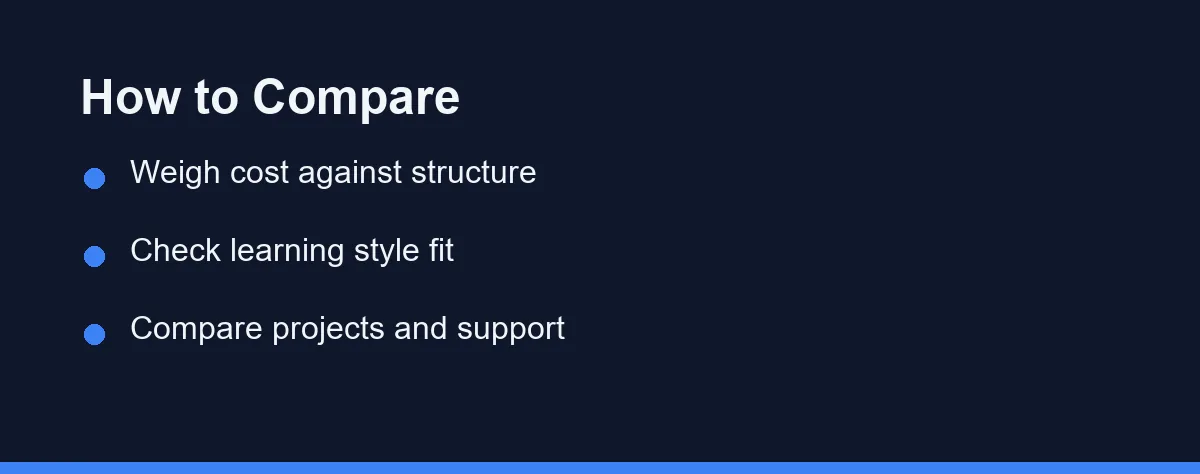
The table below compares Codecademy and freeCodeCamp on the factors that matter most to new coders. Use it as a quick reference, not a final verdict. Your learning style still leads.
| Factor | freeCodeCamp | Codecademy |
|---|---|---|
| Cost | Fully free | Free tier plus paid plans |
| Learning style | Project-based, self-directed | Guided, interactive lessons |
| Structure | Certification projects | Skill paths and career tracks |
| Portfolio building | Strong, built into curriculum | Present, deeper on paid tracks |
| Community | Large public forum | Structured, expands on paid tiers |
| Best for | Self-starters on a budget | Learners wanting guidance |
| Certifications | Free, project-based | Included in paid career paths |
The contrast is clear on a scan. freeCodeCamp trades polish for free access and heavy project practice. Codecademy trades some cost for structure, interactivity, and a smoother beginner path.
For a motivated self-starter on a budget, freeCodeCamp is hard to beat. For a beginner who wants guidance and clear steps, Codecademy earns its price. Combining them can work if each has a defined job.
How to Choose
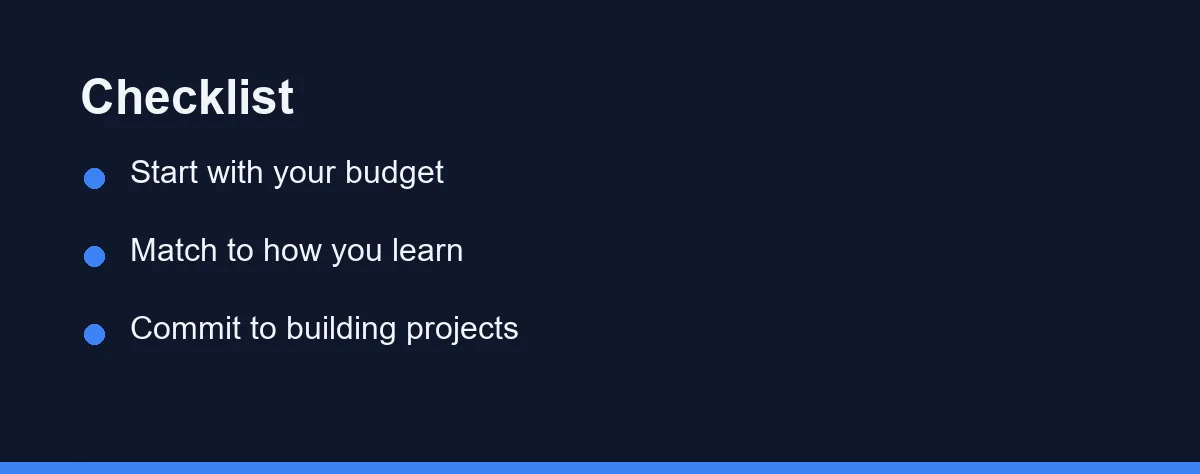
Begin with your budget and how flexible it is. If free is a firm requirement, freeCodeCamp answers cleanly. If you can invest and value structure, Codecademy becomes a real option.
Next, be honest about your learning style. If you stay motivated without hand-holding, freeCodeCamp’s project focus suits you. If you need structure and gentle pacing, Codecademy’s guided lessons help you keep going.
Then weigh your goals and timeline. Building a portfolio for job hunting favors freeCodeCamp’s project-heavy path. Learning fundamentals comfortably before specializing may favor Codecademy’s structure.
Consider where you turn when stuck. freeCodeCamp’s large forum rewards learners comfortable asking and searching publicly. Codecademy’s guided support suits those who prefer built-in structure over open community.
Finally, commit to building projects regardless of platform. Lessons alone rarely make you employable, but shipped projects do. Whichever you pick, treat real building as the core of your plan. Our Coursera vs Udemy guide compares broader course marketplaces if you want more range.
Pricing: What to Expect
Pricing is the sharpest difference between these platforms. freeCodeCamp’s curriculum and certifications are free, supported by donations. That removes cost as a barrier entirely.
Codecademy uses a freemium model with a limited free tier. Full skill paths, career tracks, and certain features require a paid subscription. Confirm current pricing on the official site, as of 2026, since plans change.
Frame Codecademy’s cost against the value of structure to you. If guided lessons keep you learning when you might otherwise quit, the plan can pay off. If you learn fine on your own, the free route may serve just as well.
Watch for annual versus monthly billing on paid plans. Longer commitments often lower the monthly rate but raise the upfront cost. Match the billing to how long you realistically expect to study.
Remember that free does not mean lower quality here. freeCodeCamp’s project-based path is respected and effective. Cost and quality are separate questions on these two platforms.
Conclusion
For learners on a budget who can self-direct, freeCodeCamp is a powerful, fully free choice. Its project-based curriculum builds real skills and a portfolio at once. Motivation and grit are the main things it asks of you.
For learners who want structure and a polished path, Codecademy justifies its cost. Its interactive lessons and clear tracks reduce early frustration. That guidance keeps many beginners moving when self-direction is hard.
The best platform is the one that matches how you learn and what you can spend. Be honest about your style and budget before choosing. Both can take a committed beginner a long way.
Whatever you pick, make building projects the heart of your plan. Shipped work, not finished lessons, is what employers notice. For related reading, see our guides on whether coding bootcamps are worth it and Coursera vs Udemy for career skills.
FAQ
Is Codecademy or freeCodeCamp better for learning to code?
Codecademy offers a polished, interactive platform with structured paths and a paid tier for extra features. freeCodeCamp is entirely free and project-focused, with a certification path built around building real apps. The better fit depends on your budget and how you like to learn.
Is freeCodeCamp really free?
Yes, freeCodeCamp's core curriculum and certifications are free, funded by donations. Codecademy has a free tier too, but many features and career paths sit behind its paid plan. So the honest split is fully free versus freemium.
Can either platform help me get a coding job?
Both can prepare you for entry-level work if you build a portfolio and keep practicing. Neither guarantees a job on its own, and employers care about projects and skills. Many learners combine these platforms with personal projects and networking.
Some links may be affiliate links. We may earn a commission at no extra cost to you.
This article was written with AI assistance. It is researched and fact-checked, not based on personal hands-on testing unless explicitly stated.
Comments
Post a Comment