Skillshare vs MasterClass: Which Is Better for Creative Skills?
Introduction
Learning a creative skill online has never offered more choices. Two popular subscriptions take very different paths: Skillshare and MasterClass. Both promise to help you grow, in their own way.
Skillshare centers on doing, with projects and practical classes. MasterClass centers on watching polished lessons from famous experts. The gap shapes what you actually get.
This guide compares them for creative skills specifically. We will look at teaching style, community, value, and who each suits. The goal is a clear match to how you learn.
By the end, you will know which platform fits your goal. Whether you want practice or inspiration should decide.
Quick Answer
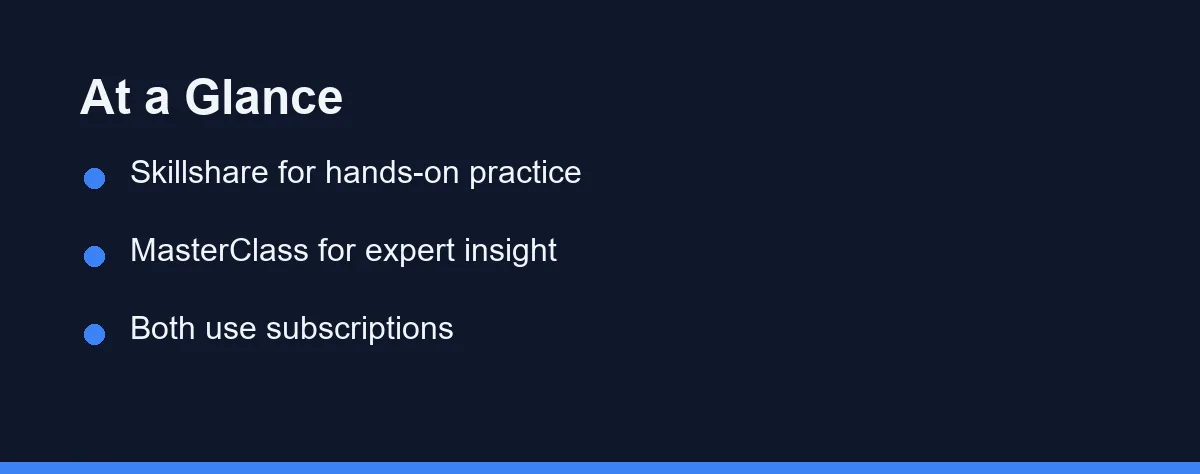
Choose Skillshare if you want to build a skill by doing. Its project-based classes and community feedback push you to practice. For hands-on learners, that structure works well.
Choose MasterClass if you want insight and inspiration from top names. Its lessons are beautifully produced and led by celebrated experts. For overview and motivation, it shines.
Neither is universally better for creative growth. Skillshare wins on practice, while MasterClass wins on polish and prestige. Your learning goal decides the winner.
What to Look For
Start with how you actually learn. Some people grow by making things, while others absorb ideas first. This preference points toward one platform.
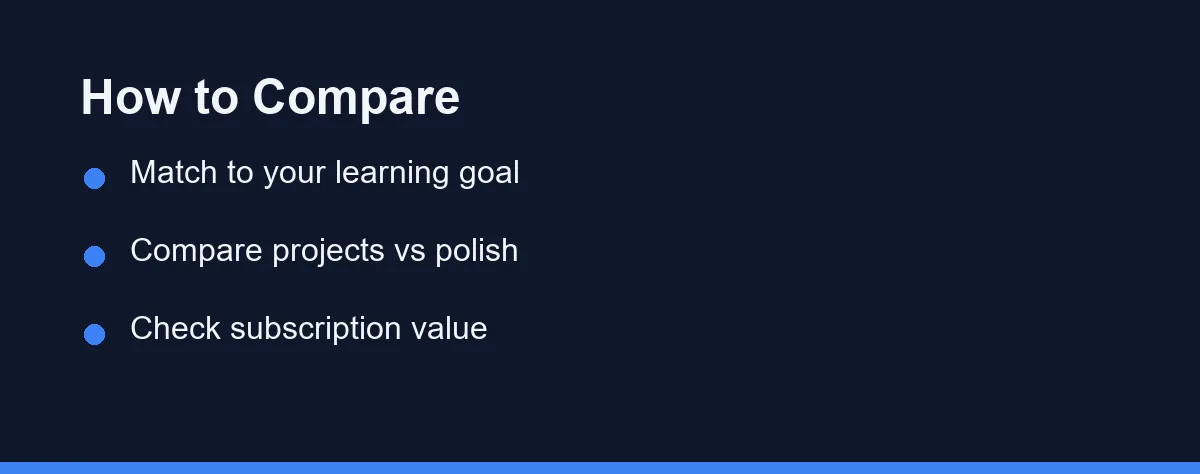
Teaching style is the core difference. Skillshare emphasizes short, practical classes with assignments. MasterClass emphasizes cinematic lessons focused on philosophy and craft.
Community and feedback matter for practice. Skillshare includes project galleries and peer input. MasterClass is more of a solo, watch-and-learn experience.
Finally, weigh value against your habits. Both charge a subscription, so frequent use lowers the cost per lesson. For a broader platform comparison, see our guide to Coursera vs Udemy.
Top Options
Each platform fits a different creative learner. The paths below show where each earns its place. Treat them as starting points, not strict rules.
Skillshare for Doers
Skillshare is the stronger pick when you want to build a portfolio. Classes are practical, and projects turn watching into making. The community adds accountability and feedback.
The trade-off is polish and star power. Skillshare instructors are skilled practitioners, not always famous names. If you want celebrity lessons, it is not the draw.
MasterClass for Inspiration
MasterClass is the better choice for high-level insight. Lessons from renowned experts offer perspective you cannot get elsewhere. The production quality is genuinely impressive.
The catch is hands-on depth. MasterClass inspires more than it drills. You may finish a class motivated but still needing practice to build the skill.
Combining Both
Some learners use both for different needs. MasterClass sets the vision, and Skillshare builds the technique. This pairing balances inspiration with practice.
Used together, they cover both mindset and method. If your goal is a broader career skill rather than a creative craft, our Coursera vs Udemy guide covers credential-focused options.
Feature Comparison
The table below summarizes how Skillshare and MasterClass compare for creative skills. Use it as a quick reference, not the final word. Always confirm current details on the official sites.
| Feature | Skillshare | MasterClass |
|---|---|---|
| Teaching style | Hands-on, project-based | Cinematic expert lessons |
| Instructors | Skilled practitioners | Famous experts |
| Community feedback | Yes | Limited |
| Production quality | Practical | Very high |
| Best for | Building skills by doing | Insight and inspiration |
| Pricing model | Subscription | Subscription |
Skillshare leads on practice and community. If you learn by making and want feedback, it covers more ground. The classes are built to produce work.
MasterClass counters with prestige and polish. For overview, motivation, and expert perspective, it is hard to match. The trade is less hands-on depth.
How to Choose
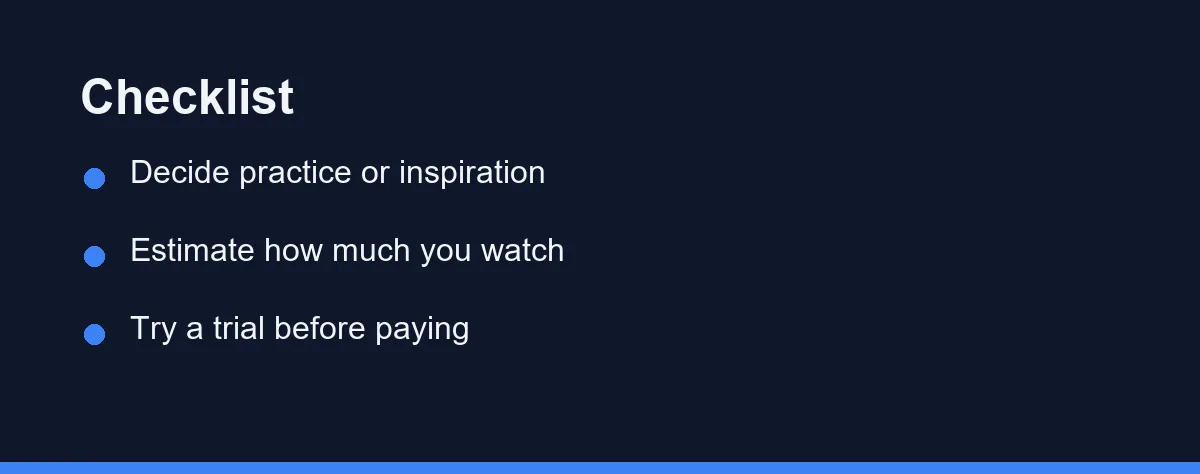
Begin by naming your goal clearly. Do you want to build a specific skill or gain broad inspiration? Your honest answer points to one platform.
Next, estimate how much you will watch. Both are subscriptions, so frequent use improves value. Occasional learners should weigh that carefully.
Then consider whether you want feedback. If community input helps you improve, Skillshare fits. If you prefer solo learning, MasterClass is fine.
Finally, use any trial period fully before committing. Watch a few classes and complete a project if possible. You can also compare credential-focused options in our are coding bootcamps worth it guide.
Pricing: What to Expect
Both platforms use subscriptions, so pricing shifts and depends on how much you learn. Neither sells single classes in the traditional sense. Always confirm current prices on the official sites.
Skillshare typically offers an annual plan that lowers the monthly cost. For frequent, hands-on learners, the value adds up. Light users should watch how often they log in.
MasterClass positions itself as a premium subscription. The cost reflects its production quality and expert roster. For inspiration seekers, that can be worthwhile.
Compare the total cost against your real usage. A subscription only pays off if you use it. Try each fully before locking into a year.
Common Mistakes to Avoid
Learners waste money on these platforms in a few predictable ways. Avoiding them makes either subscription pay off.
Do not subscribe and then forget to watch. A monthly or annual fee only delivers value if you use it. Set a simple schedule so lessons become a habit.
Do not confuse watching with learning. On MasterClass especially, it is easy to finish inspired but no more skilled. Follow lessons with real practice to build the ability.
Do not skip the projects on Skillshare. The assignments are where the actual learning happens. Watching without doing wastes the platform’s biggest strength.
Do not ignore free trials before committing to a year. Both platforms let you sample content first. Use that window to judge whether the style fits you.
Do not expect either platform to replace focused practice. Creative skills grow through repetition and feedback over time. Treat the subscription as a guide, not a guarantee.
Do not overlook whether the topics you want are actually covered. Browse the catalog for your specific interests before paying, since depth varies widely by subject.
Conclusion
Skillshare and MasterClass both support creative growth in different ways. Skillshare helps you build skills through practice, while MasterClass inspires with expert insight. Neither is universally better.
Choose Skillshare if you learn by doing and want community feedback. Choose MasterClass if you want polished lessons and high-level perspective. Let your goal guide the decision.
For some learners, combining both offers the best of each. Draw vision from one and technique from the other. That mix balances inspiration with real practice.
Whichever you choose, remember that watching is not the same as doing. Creative skills grow through consistent practice over time. The platform is a starting point, not a shortcut.
FAQ
Is Skillshare or MasterClass better for creative skills?
They serve different goals. Skillshare focuses on hands-on, project-based classes for practical creative skills, while MasterClass offers polished lessons from famous experts for inspiration and overview. Your learning goal decides which fits.
Which is better for actually learning a skill?
Skillshare is generally more practical for actually building a skill, thanks to projects and community feedback. MasterClass is more about high-level insight and motivation from top names. Doers often prefer Skillshare.
Which offers better value?
Both use subscriptions rather than one-off purchases, so cost depends on how much you watch. Skillshare tends to suit frequent, hands-on learners, while MasterClass suits those who want premium, curated lessons. Confirm current pricing on each site.
Some links may be affiliate links. We may earn a commission at no extra cost to you.
This article was written with AI assistance. It is researched and fact-checked, not based on personal hands-on testing unless explicitly stated.
댓글
댓글 쓰기