Are Online Cybersecurity Courses Worth It for Beginners? A 2026 Guide

A Way In Without a Four-Year Degree
Cybersecurity is one of the most talked-about career paths, and online courses promise a way in without a four-year degree. For a beginner, that promise is appealing but also easy to oversell. The honest answer depends on what you expect a course to do.
An online course can teach genuine, in-demand skills at a fraction of a degree’s cost and time. It can also disappoint if you treat it as a shortcut to a job with no practice, no certification, and no follow-through.
That gap between hope and reality is the heart of this guide. A course is a foundation, not a finish line, and knowing that changes how you choose and use one. The right expectations make the investment worthwhile.
This guide explains whether online cybersecurity courses are worth it for beginners in 2026. We cover what they realistically deliver, how they compare to degrees and certifications, and how to pick one. We avoid quoting course prices, since they change; confirm current figures on each provider’s official site.
Worth It as Part of a Plan, Not as the Plan

For most beginners, a good online cybersecurity course is worth it, but only as part of a larger plan. It builds foundational knowledge affordably and can prepare you for an entry-level certification that employers actually recognize.
The value comes from three things together: solid instruction, hands-on labs, and a path toward a credential. A course that only lectures, with no practice or certification target, teaches theory but leaves you short of job-ready.
What a course cannot do is guarantee a job on its own. Beginners who expect a hire from a single certificate are usually let down. The course starts the journey; practice and a recognized certification carry it forward.
The demand behind the hype is real. The Bureau of Labor Statistics projects 21% job growth for information security analysts from 2025 to 2035, with a median pay of $129,180 in May 2025. The same page says analysts typically need a bachelor’s degree plus related work experience, and that employers may prefer certified candidates.
So the answer is yes, with conditions. Choose a course with labs and a clear certification path, and treat it as step one. Our do online certificates help get a job guide sets realistic expectations.
Hands-On Labs Before Anything Else
Start with hands-on labs, since cybersecurity is a practical field. Reading about attacks and defenses is not the same as configuring a firewall or analyzing traffic. A course with guided labs turns concepts into skills you can demonstrate.
Look at the certification path next. Many beginners use a course to prepare for a recognized entry-level certification, which carries more weight than a course completion badge alone. Check whether the course maps to a known exam.
Check how current the content is. Cybersecurity changes quickly, and outdated material teaches the wrong lessons. Favor providers that update courses regularly and note the last revision date.
Consider the provider’s reputation and transparency. Reputable platforms publish their syllabus, instructor background, and honest outcomes. Vague marketing and job guarantees are warning signs, not selling points.
Weigh the pacing and support for beginners. A gentle on-ramp, clear explanations, and an active community help you stick with it. Our are Google career certificates worth it guide is a useful reference point for beginner programs.
Finally, confirm the real cost and what it includes. Some courses bundle exam vouchers or lab access, while others charge extra. Verify exactly what you get on the provider’s official site, as of 2026.
Where Beginners Actually Start From
Beginners come to cybersecurity from different starting points, and the best course depends on your goal and background. Each profile below points toward the approach that fits.
The Career-Changer
If you are switching careers into security, you need structure and a credential employers recognize. A comprehensive beginner course tied to an entry-level certification gives you both a learning path and a resume signal. The certification is what opens doors.
The priority is a recognized outcome. A course that prepares you for a well-known entry-level exam is worth more than a longer course with an unknown badge. Employers hire on credentials they trust.
The trade-off is time and effort. Career changers must commit to steady study and hands-on practice over months. Our are coding bootcamps worth it guide offers a parallel view on intensive career pivots.
The Curious Explorer
If you are testing whether security interests you, start smaller and cheaper. A short foundation course lets you sample the field without a large commitment. If it clicks, you can invest in a certification path later.
The value is low-risk exploration. You learn enough to know whether the work suits you before spending heavily. Many people discover a genuine interest this way.
The caution is stopping at curiosity. A single intro course rarely builds job-ready skills, so treat it as a first taste. Confirm what the course covers on the official site before assuming it goes deep.
The Skill-Adder
If you already work in IT and want to add security skills, target the specific gaps in your knowledge. A focused course on a defined topic, tied to a relevant certification, extends your value without repeating basics you know. Precision beats breadth here.
The benefit is efficiency. You build on existing experience rather than starting over, which shortens the path to a useful credential. Your current role gives you context most beginners lack.
The key is choosing the right specialization. Match the course to where your career is heading. Our is Google cybersecurity certificate worth it guide looks closely at one popular entry point.
Courses Weighed Against the Other Ways In
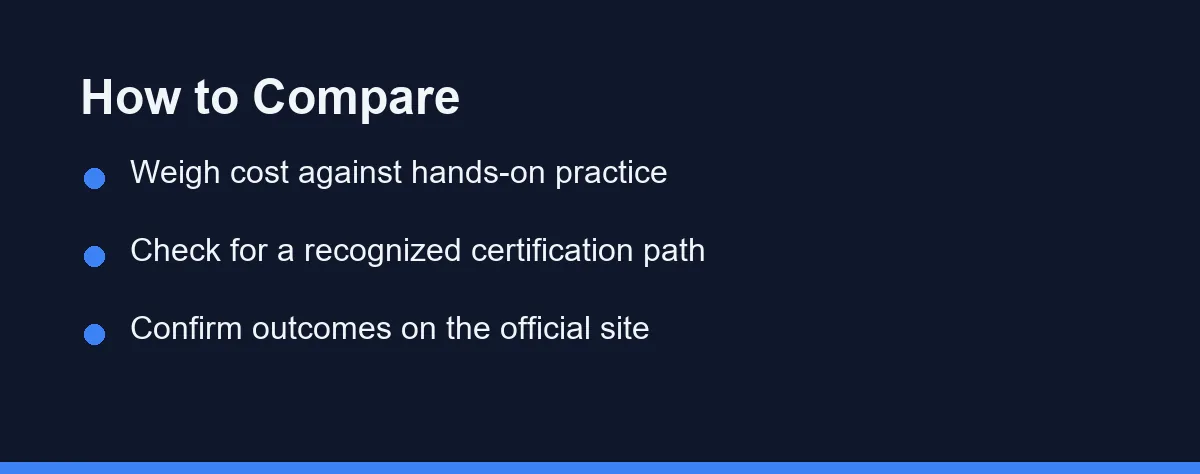
The table below summarizes how to weigh online courses against other learning paths for beginners. Use it as a framework, then verify each provider’s specifics on the official site. Programs and outcomes change, so treat this as a snapshot.
| Factor | Online course | Degree | Certification prep |
|---|---|---|---|
| Cost | Low to moderate | High | Low to moderate |
| Time | Weeks to months | Years | Months |
| Hands-on labs | Often included | Varies | Often included |
| Employer signal | Moderate | Strong but broad | Strong and specific |
| Flexibility | High, self-paced | Low | High |
| Best for | Foundations and skills | Broad academic base | Job-ready credential |
Reading across the rows, the trade-offs are clear. A course is fast and affordable, a degree is broad but slow and costly, and certification prep aims squarely at employer recognition. Most beginners combine a course with a certification target.
That is why these paths are not rivals so much as stages. A well-chosen course builds the foundation, and a recognized certification proves it. Match the combination to your goal and timeline.
Name the Goal Before You Enroll
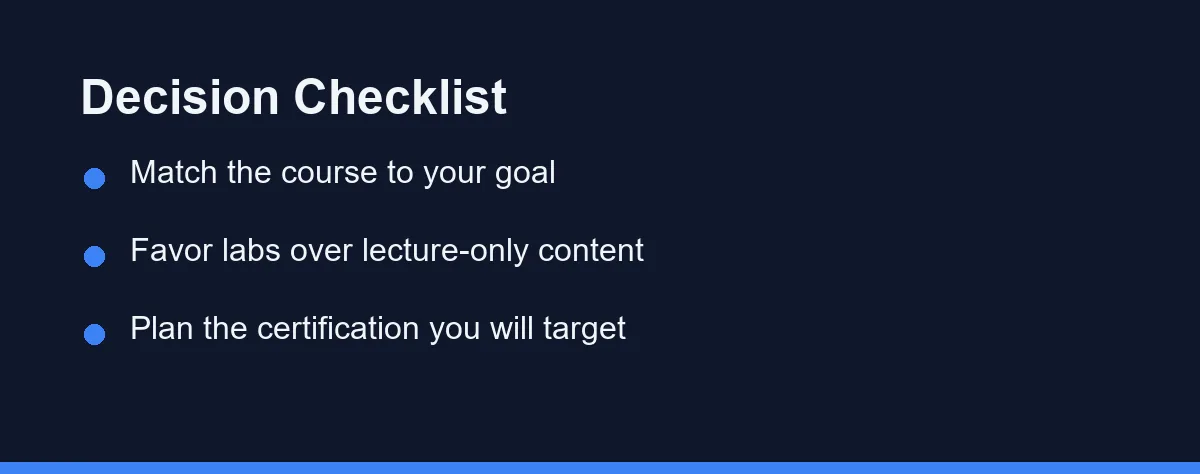
Start by naming your goal. Changing careers, exploring interest, and adding a skill each call for a different course. Deciding the aim first narrows the options quickly.
Next, favor courses with hands-on labs over lecture-only content. Security is practical, and employers want demonstrated ability. A course you can practice in beats one you only watch.
Then check the certification path. Confirm the course maps to a recognized entry-level exam, since that credential carries the real hiring weight. A clear path from course to certification is a strong sign.
Verify the provider’s transparency and how current the content is. Reputable platforms share syllabi, instructor backgrounds, and honest outcomes, and they update material often. Vague promises and job guarantees are red flags.
Finally, plan your full path, not just the first course. Decide which certification you will target and how you will keep practicing afterward. Our is DataCamp worth it for beginners guide models this stepwise approach for a related field.
From Cheap Introductions to Lab-Bundled Programs
Online cybersecurity courses span a wide range, from low-cost introductions to more structured programs that bundle labs and exam prep. The goal is to understand what you get for the price. Confirm all current figures on the provider’s official site, as of 2026.
Entry-level courses tend to be affordable and self-paced. They deliver foundations and sometimes basic labs, which suits explorers and beginners testing the field. Value here is more about learning than credentials.
More comprehensive programs cost more but often include hands-on labs, structured paths, and certification preparation. These suit career changers who need a job-ready outcome. Check whether an exam voucher is included or charged separately.
Certification exams usually carry their own fee, apart from the course. Budget for the exam itself, not just the training. Some bundles cover it, so read what is included before assuming.
Finally, weigh subscriptions against one-time purchases. A monthly subscription can be cheaper if you finish quickly, but adds up if you take your time. Confirm the billing model on the official site before committing.
Which Beginners Should Buy a Course
The factors above guide the choice. Here is the direct call for the beginners who most often ask whether a course is worth it.
The career changer: A course is worth it, but only paired with a recognized entry-level certification and steady lab practice. Choose a structured program that prepares you for a known exam, and treat it as the first stage of a longer plan.
The curious explorer: Start with a short, affordable foundation course before spending more. It tells you whether security genuinely interests you at low risk. If it clicks, move on to a certification path rather than stopping at the intro.
The IT professional adding skills: Target a focused course tied to a relevant certification that fills a specific gap. Your existing experience shortens the path, so precision matters more than breadth. Confirm the specialization fits where your role is heading.
The budget-conscious beginner: Prioritize courses that include labs and exam prep in one price, and budget separately for the certification exam. A cheaper lecture-only course may cost less upfront but leave you short of a job-ready outcome.
The unsure beginner: Begin with a reputable foundation course, then decide on a certification based on what you enjoyed. Our Google project management certificate vs CAPM guide shows how to compare credential paths once you know your direction.
Real Skills, Realistic Expectations
Online cybersecurity courses are worth it for most beginners, but only with the right expectations. A good course teaches real skills affordably and can prepare you for a recognized certification that employers value.
Treat the course as a foundation, not a guarantee. Pair it with hands-on labs and a clear certification target, and plan how you will keep practicing afterward. The course starts the path; your follow-through completes it.
Whichever course you choose, favor labs over lectures, confirm the certification mapping, and check the provider’s transparency. Avoid anything that promises a job or a salary, as those claims signal a weak program.
Above all, confirm the syllabus, outcomes, and cost on the provider’s official site, since programs change often. The right course, used as step one, is a worthwhile investment. For related reading, see our guides on do online certificates help get a job and is Google cybersecurity certificate worth it.
FAQ
Are online cybersecurity courses worth it for beginners?
For many beginners, yes, because online cybersecurity courses can teach real, in-demand skills at a fraction of a degree's cost and time. They work best when paired with hands-on labs and a recognized certificate that employers know. A course alone rarely lands a job, but it builds the foundation and can prepare you for an entry-level certification. Check the syllabus and outcomes on the official site.
Do I need a degree to learn cybersecurity?
No, you do not need a computer science degree to start learning cybersecurity, and many people enter the field without one. For analyst jobs, though, the Bureau of Labor Statistics says employers typically ask for a bachelor's degree plus related experience, and may prefer certified candidates. Either way, comfort with computers, networks, and basic problem-solving helps a lot, so beginners often start with foundational courses before specializing.
How long does it take to learn cybersecurity online?
It varies by course and how much time you commit, but a beginner foundation course often takes a few months of part-time study. Preparing for an entry-level certification can add several more months. Consistent weekly hours matter more than the calendar; steady, hands-on practice builds skills faster than cramming. Confirm the estimated time on the course's official page.
What should I look for in a beginner cybersecurity course?
Look for hands-on labs, a clear path toward a recognized entry-level certification, and up-to-date content, since the field changes fast. Reputable providers publish their syllabus, instructor background, and completion outcomes. Beginner-friendly pacing and a supportive community also help. Avoid courses that promise instant jobs or guaranteed salaries, as those claims are red flags.
What is the difference between a cybersecurity course and a certification?
A course teaches the material, while a certification is a credential you earn by passing an exam that employers recognize. Many beginners use a course to prepare for a certification exam. The course builds understanding; the certificate signals it to hiring managers. Both have value, but a recognized entry-level certification often carries more weight on a resume.
Sources
- BLS Occupational Outlook Handbook: Information Security Analysts — checked 2026-10-15
Some links may be affiliate links. We may earn a commission at no extra cost to you.
How this article was made: it was drafted with AI assistance from the official sources listed above, and its figures were checked against those pages on the dates shown. It is not based on personal hands-on testing.
Comments
Post a Comment